Posts

Showing posts with the label colored

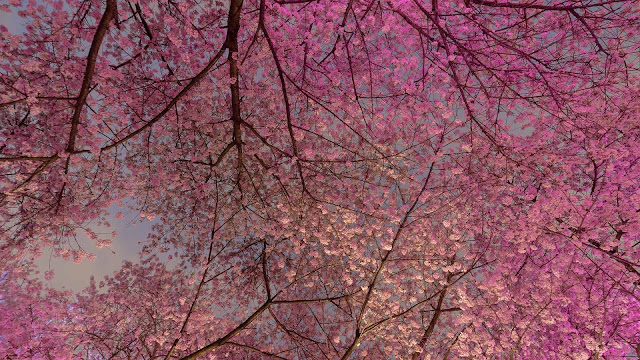
White, Pink And Purple Blossom

Image
Blooming cherry trees in Vancouver, B.C, Canada

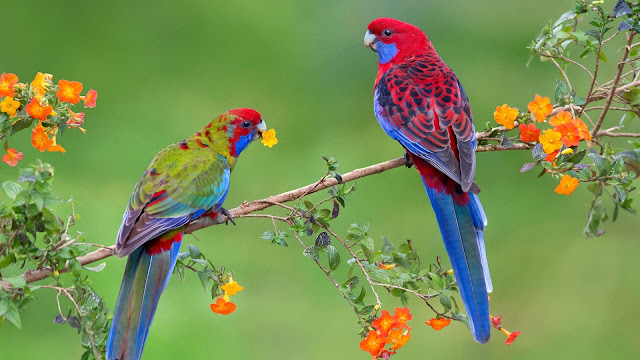
A Pair Of Crimson Rosella

Image
Crimson rosella with juvenile, Victoria, Australia Snack time for the crimson rosella Everybody loves a little snack, and the cheerful rosella is no exception. The bird, which is native to Australia (but has been introduced to New Zealand and Norfolk Island) will happily feast on tree blossoms, berries and insects, but more commonly nibbles on seeds of eucalyptus, grasses and shrubs. Make sure to pay close attention to its colour though, because there are actually three variations of rosellas. The crimson rosella, with a red plumage (the layer of feathers that mostly cover a bird) and bright blue cheeks. Then there is the ‘yellow rosella’, which has the areas of crimson replaced with a light yellow and greener tail, as well as the ‘Adelaide rosella’ which can range from yellow to a reddish-orange in colour. If you do happen to spot one out in the wild, don’t be scared - the birds are relatively familiar with humans and are known to accept hand-held food.

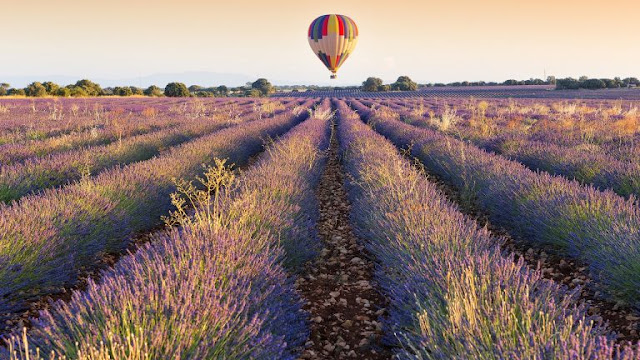
Flying Among The Purple Fields

Image
Balloon over Lavender plantation, Brihuega, Guadalajara province, Castilla La Mancha, Spain

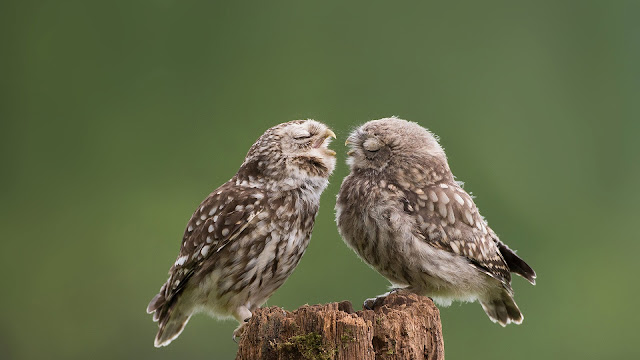
Mother– A Savior, A Protector

Image
A little owl love on Mothering Sunday A love so pure and so selfless! This little owl is shown feeding her baby son as we celebrate Mothering Sunday in the UK. The UK’s smallest owl, they reach full height at around 20cm– so are quickly caught up by their offspring. With striking yellow eyes and a mottled brown and cream colouring, it is not unusual to spot little owls sitting on fence posts like this one during the daytime, scouring the ground for food – from crickets and beetles to small mammals. They nest in holes – usually in trees but, thanks to their small stature, can set up homes in abandoned rabbit burrows and cavities in buildings and rocks. The little owl was introduced to the UK in the late 1800's and is now largely found in the farming landscapes of southern and south east England. They raise their young between May and July and are quite chatty, so listen out for their distinctive calls - the males can be particularly noisy when establishing their territo...

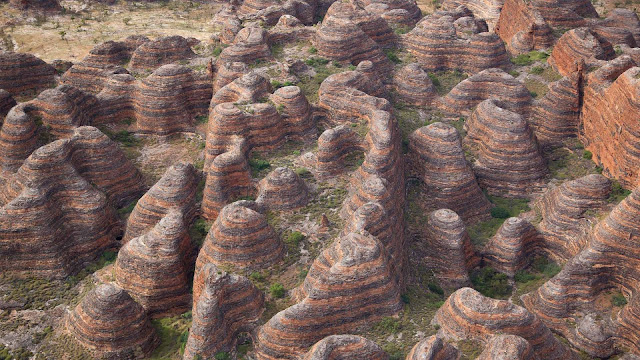
Bungle Bungles Or Beehives!

Image
Beehive domes in the Bungle Bungle Range in the Purnululu World Heritage Listed National Park More than meets the eye Welcome to Purnululu National Park, a World Heritage Listed site that managed to be one of the world’s best kept secrets until relatively recently. Although it has existed for around 350 million years and respected by its Indigenous Australian custodians for upwards of 40,000 years, it wasn’t until 1983 that the area became public knowledge after airborne treasure-seekers stumbled upon the area while making a documentary. Nowadays, the park’s most popular area is the Bungle Bungle Range, also commonly referred to as the Bungle Bungles. With soaring rocks rising 250 metres above the grasslands, many people liken the maze of domes to giant beehives, however you needn’t worry about pesky stingers - it’s in look only. The formations were instead created over the span of 20 million years as water gradually eroded the orange and black-striped karst sandstone into t...

A Star Frog!

Image
Tree frog on a flower, Lake Kissimmee, Florida, USA The charming prince?  Charming princess, rather.. Perched on the petals of a Nymphaea, on Lake Kissimmee in Florida, we thought this little frog quite interesting to watch.  In the United States, these little amphibians are celebrated during the month of the frog which pays homage to all the frogs in the world, which represents no less than 4,000 species!  Among the different kinds of frogs, this little tree frog is favored by most of us, no doubt because of its small size, funny face and the fact that it requires very little attention.  Some of the American gardens are populated by it and it is even the official reptile of Louisiana and Georgia!  A star frog, what.
The Summer And The Adventurous Ocean Baths

Image
Bird's-eye view of Bronte Baths ocean pool outside Sydney, Australia Summer in the southern hemisphere! While we're looking forward to spring in the northern hemisphere, many in Australia are probably preparing for the end of a bright summer.  The comparatively moderate autumn weather must be a relief for the people down under.  Some will likely greet the change of seasons with a trip to the pool, like the swimmers in this picture of the Bronte Baths, a suburban Sydney pool. While oceanfront swimming pools are not only found in Australia but—  this country is known for its many oceanfront pools that provide sheltered places to swim in places where rocky shorelines and occasional shark attacks can make swimming in the ocean difficult or dangerous.

The Allure Of Some Predators

Image
Eurasian Eagle-Owl (Bubo bubo) in wildflower meadow, Rhineland-Palatinate, Germany Look at the ears and the fascinated feathers of this magnificent creature! Hedwig is probably one of the most famous owls in contemporary film history. As a faithful companion of Harry Potter, she has not only found a place in the hearts of many children, but also delighted many adults. We don't know why our leading actor looks so grim in this picture, but even a Lord Voldemort should be anxious and serious. Our owl – scientifically known as Bubo bubo - belongs to a genus of birds in the family of the actual owls. With a size of up to 75 centimetres, a weight of around 3.4 kilograms and a wingspan of about 1.80 metres, the owl is the largest owl in the world. Special features are its eye-catching feather ears and the striking orange eyes. Today's picture was taken in Rhineland-Palatinate. The main area of the owl is located in the state with the capital Mainz in the districts of Bad ...

The Messenger Of Happy Season

Image
Male mountain bluebird in Yellowstone National Park, Wyoming Hello, mountain bluebird Welcome back! Although this bright fellow may be enduring the last of this year's snow in Yellowstone National Park, his presence means winter will soon be ending across the world. Bluebirds are a symbol of happiness and a welcome sign of spring in many cultures. Soon other migratory birds will arrive in the Greater Yellowstone Ecosystem - a seven-million-hectare tract that includes Grand Teton National Park and surrounding national forests. It's the world's largest intact ecosystem in the northern temperate zone. What exactly does that mean? Since wolves were reintroduced to Yellowstone 25 years ago, all the animal species that were first documented by European explorers can still be found here. (© Jason Savage/Tandem Stills + Motio)

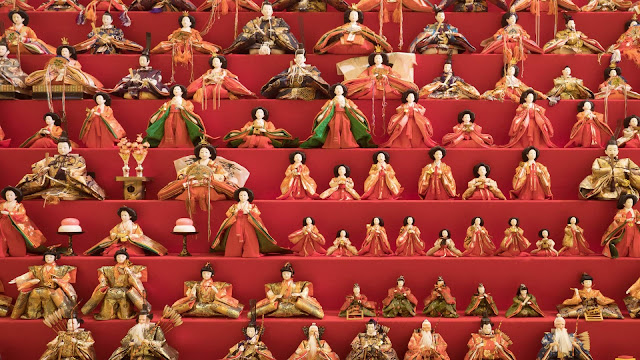
Hinamatsuri— The Girl's Day

Image
Today is “Hina Festival”. “Hina Doll” It is a spring festival originally transmitted from China as "Kami". I t is called "peach festival" because it is performed at the time when peach blossoms bloom ... Originally, before the Heian period (almost 1,000 years back), it was performed regardless of gender in the same way as the Dango festival, but it gradually became a girl's festival. The custom of this day is to display dolls on a red carpet. The dolls with dresses of Emperor and Empress are placed at the top and the ladies with ministers are in lower rows of the shelf. It is said that the ebb and flow of the evil to the dolls and the doll play of the girls were linked. The Japanese are a bit superstitious here. They believe that if you're a girl and fail to take the dolls out of the shelf right after the festival, no one is going to marry you for a long period of time.  So hurry up girls!  Put the dolls away! ( © yoshi0511 / Shutterstoc)

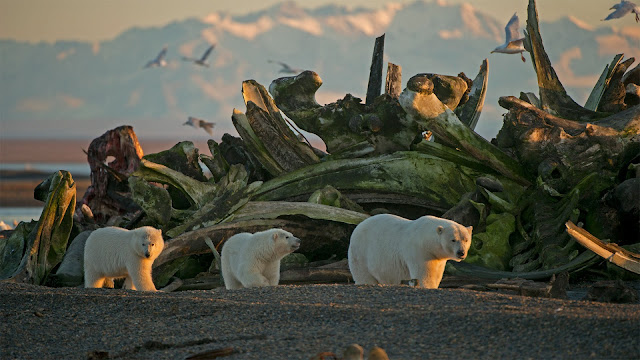
The Three Musketeers (Polar Bears)

Image
A polar bear sow and her cubs in Alaska's Arctic National Wildlife Refuge Three cheers for polar bears! February 27 is International Polar Bear Day, an observance created to bring attention to the important role these alpha predators play in the Arctic ecosystem. Though polar bears aren’t endangered - their current conservation status is ‘vulnerable’ - these magnificent beasts have become a sort of mascot for the race to slow the melting of Arctic sea ice. The Arctic ice is crucial to the bear's survival, as they hunt the ringed seals that bob up through holes in the ice. As Arctic ice decreases, the polar bear's hunting ground does too. ( © Steven Kazlowski/Minden Picture)

Carnival Of Olinda

Image
"Carnival giant puppet", Olinda, Brazil. 

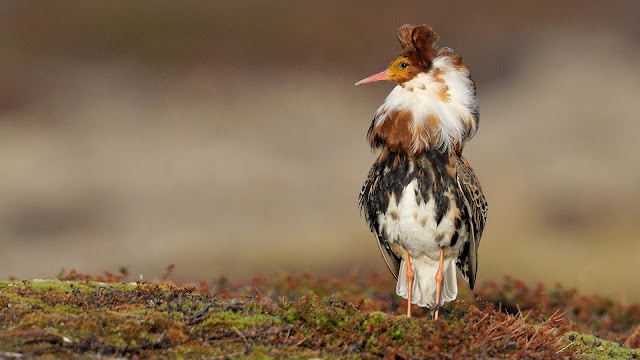
London Fashion Week And Little Old Ruff

Image
Ruff (Philomachus pugnax) male for London Fashion Week. This male ruff is catwalk-ready in his lavish plumage, designed to catch the eye of admiring females (who are much more modestly dressed). The males' flamboyant collars come in black, white, ginger, stripy and plain varieties which, along with their head tufts, help them compete for attention as they strut their stuff during breeding season. These wading birds breed in river meadows and coastal marshes from northern Europe to Siberia and can be spotted on the east and south coasts of the UK. They are usually passing through en route to African wetlands although some will over-winter here.

Yuki Fest—Sounkyo Onsen

Image
"Sounkyo Ice Falls Festival", Kamikawa-cho, Hokkaido An ice waterfall festival has been held since January 23 in Sounkyo, Kamikawa-cho, Hokkaido.  This festival, which lasts until March 15, offers a variety of attractions, such as an iced bar where you can drink limited liquor, and Ainu folk dances in an illuminated ice town.

“winter folk festival”

Image
Dyed wool on the Rossmarkt in Berching, Bavaria, Germany

"Peach blossoms"

Image
It is “Ritsuharu”. “Peach blossom”, which means  that the spring begins.

Rapa Nui Festival

Image
Moai statues at Ahu Tongariki in Rapa Nui National Park, Easter Island, Chile

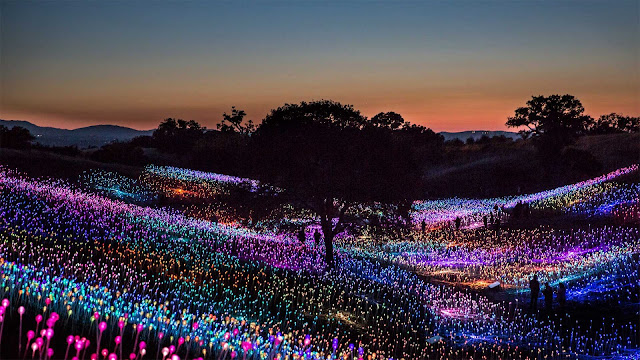
Field of Light at Sensorio

Image
Field of Light at Sensorio, by Bruce Munro, Paso Robles, California. When the sun sets, the fibers illuminate, creating a shimmering, interactive landscape in the meadow. Fifty eight thousand and eight hundred solar powered lights change colors and make people happy.