Posts

Showing posts with the label animal

A Love So Deep... So Inspiring..
Image
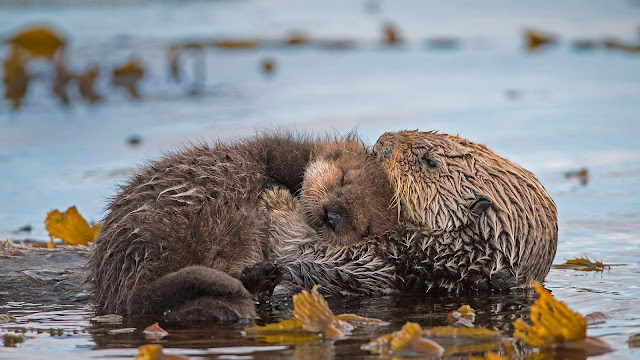
  A new born pup is sleeping on the Mummy Sea Otter,  Monterey Bay  California. Sea otters shower their pups with attention, cradling them and grooming them for hours. But it's more than a gesture of affection - a mummy will rub her pup to fluff the pup's coat, which causes the fur to retain air bubbles. The air insulates the pup from chilly water and sometimes causes the youngster to float like a cork. Sea otters can survive on land, but they spend most of their time in the water, sleeping above the surface and anchoring themselves with kelp or by holding onto each other. When they get hungry, they use rocks as tools to hunt for food and pry open shells - something that makes them relatively unique, as they're one of the few mammals that can use tools.
Two Fighting Spirits Like Two Peas In A Pod

Image
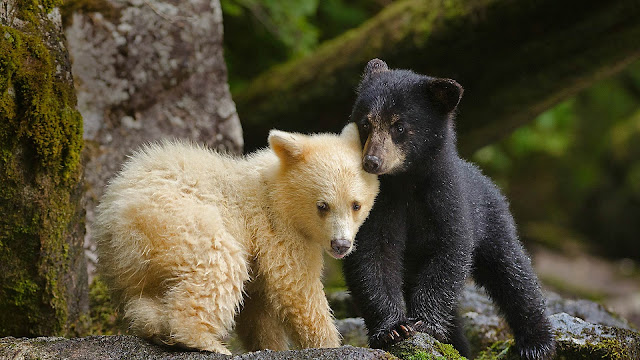
A Kermode bear cub huddling with its sibling in Canada's Great Bear Rainforest, British Columbia by Ian McAllister. Brothers rivalry! They’re very cute but we’re betting these two Kermode bear siblings are a handful (hang in there, mama bear!). Kermode bears are a subspecies of the American black bear, although they're obviously not always black. They have a recessive gene which sometimes results in cream or white fur. While most Kermode bears are black, scientists estimate that between 10 and 20 per cent of the population have ivory coats. Known as ‘spirit bears’, they are special to indigenous people of the British Columbia coastal regions in Canada where they live. Today is Siblings Day in the US, which celebrates the bond between brothers and sisters.

Narwhal— The Most Enchanted Beast Of The Sea

Image
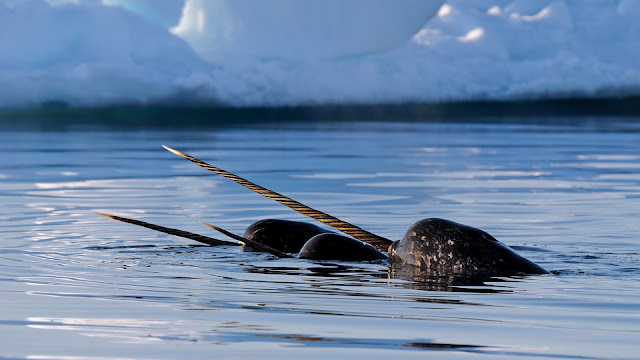
Let's celebrate  ‘the sparkliest day of the year' because it's The Unicorn Day by honoring  the beast of sea: A pod of narwhals or  narwhales. A pod of narwhals near Baffin Island, Nunavut, Canada by Eric Baccega. A pod of narwhals brandishing their tusks in the Arctic Ocean. Narwhals develop only two teeth, but - in males especially - the left canine can grow into a three-meter-long spiral tusk. As the tusk juts out of the top of their head, it's given the whale the nickname, 'unicorn of the sea'. For centuries narwhal tusks were sold to gullible buyers as rare unicorn horns with magical powers. These 'unicorn horns' were so prized for their medicinal and healing properties that in the 16th century, Queen Elizabeth I paid around A$20,000 for one (equal to the cost of building a castle back then). By the late 17th century, scientific facts started replacing superstitious beliefs and the unicorn horn market fell out of favor. Today narwhals c...

A Fool Bird On A Fool's Day

Image
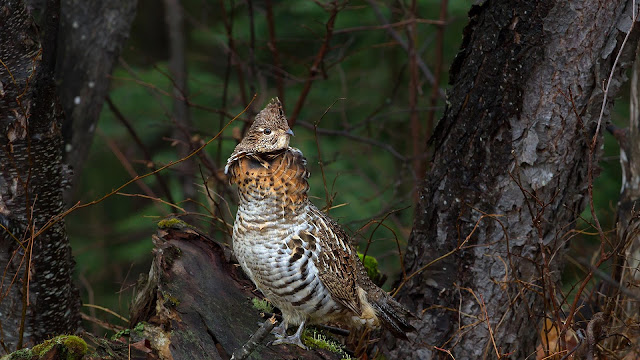
A fool's hen? Ruffed grouse in Algonquin Provincial Park, Ontario, Canada by Jim Cumming. Various types of forest grouse are sometimes rather unkindly referred to as 'fool hens' because they don't fly away when approached by humans. In its northernmost habitat in Canada, the ruffed grouse pictured here is more likely to behave a little more ‘foolishly’, sitting and looking at people as they approach. But further south, they are more wary and fly off at the slightest sign of movement. And they can be quite the acrobatic fliers when needed, flying in short spurts and making sharp twists and turns as they navigate thick forests.

A Shy, Shambling Elephant

Image
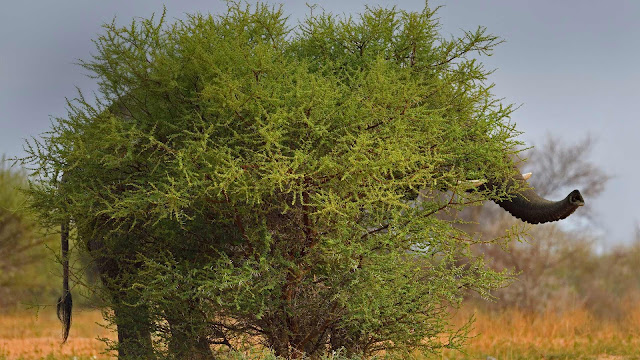
This shy guy here, is hiding for what! Why do elephants hide in the first place? ... Because they're so good at it. And none are as skilled at self-concealment as this specimen from the Loxodonta genus of African elephants - namely the species laprofolis. These mammoth creatures roll in the mud, getting covered in seeds which stick to their grooved hide. When it rains, the seeds sprout into dense, leafy growths which camouflage the huge beast as it wanders the savannah. Don’t believe us? Maybe take a closer look at the species’ name and see if you're still not convinced it exists. Either way, it’s best to be on your guard today, who knows where the next elephant of surprise will come from? This image is taken from  Marakele National Park, Limpopo, South Africa, by  Staffan Widstrand.

A Cat Nap After Losing An Hour Of Sleep

Image
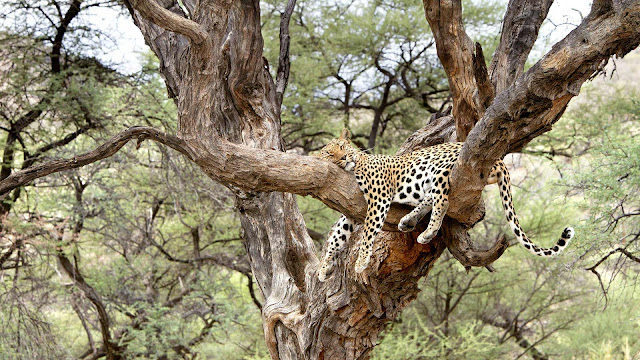
Leopard snoozing in a tree in Namibia Feeling tired?. A good day for a nap Like the napping African leopard in today's image, you might be feeling a little tired after losing an hour of sleep when the clocks went forward at 1 am, as we switch to daylight saving time. The good news is, you’ll be repaid with lighter evenings from now on. In the UK, clocks always go forward one hour on the last Sunday in March and go back an hour on the last Sunday in October. We’ve been switching to BST (British Summer Time), since World War One so you’d think we’d be used to it by now. But it’s tiring losing that hour in bed, so maybe take a leaf out of our leopard’s book and grab a cat nap if you can.

A Tiny Bird And Three Borrowed Days

Image
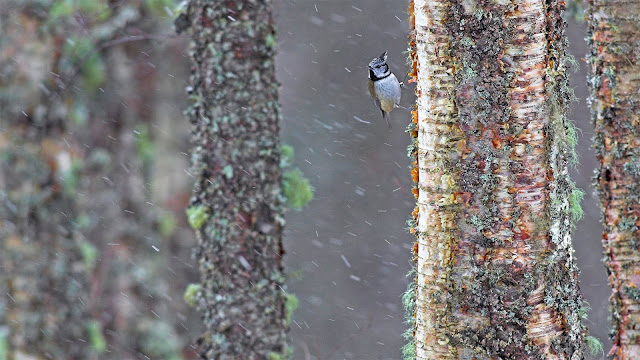
A stormy crested tit, Scotland Three more wintry days! Scottish people believe that the last three days of March is borrowed from April that's why are called 'Borrow Days'. March normally consists of lots of weather lore— one is springy and breezy, the other is wintry and snowy and the last one is rainy and sleety, according to Scottish folklore. These days are considered the wintry lapse and some think, they are ill-omen to reduce the businesses and makes birds frozen on their perch on the branches of trees. So today, in this image a b lack crowned  tit  ( Parus rubidiventris)  is perching on a tree in a stormy weather. Its  body is 12 cm long and is characterized by black crown feathers and chest pockets, white cheeks, gray upper body, no wings, gray lower body, and brown rump.  Young birds are dark and have a short plumage.   Generally they inhabit in alpine forest areas nearly 2000 meters above sea level, often active in alpine coniferous...

A Pair Of Crimson Rosella

Image
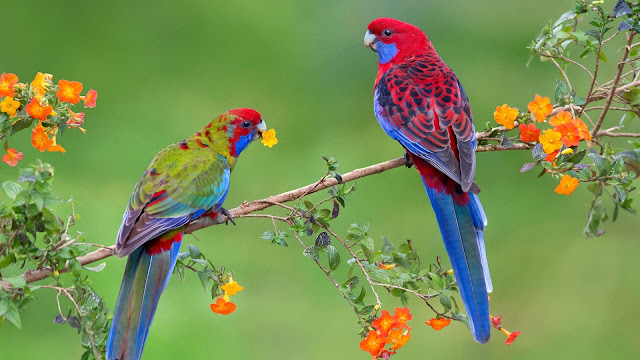
Crimson rosella with juvenile, Victoria, Australia Snack time for the crimson rosella Everybody loves a little snack, and the cheerful rosella is no exception. The bird, which is native to Australia (but has been introduced to New Zealand and Norfolk Island) will happily feast on tree blossoms, berries and insects, but more commonly nibbles on seeds of eucalyptus, grasses and shrubs. Make sure to pay close attention to its colour though, because there are actually three variations of rosellas. The crimson rosella, with a red plumage (the layer of feathers that mostly cover a bird) and bright blue cheeks. Then there is the ‘yellow rosella’, which has the areas of crimson replaced with a light yellow and greener tail, as well as the ‘Adelaide rosella’ which can range from yellow to a reddish-orange in colour. If you do happen to spot one out in the wild, don’t be scared - the birds are relatively familiar with humans and are known to accept hand-held food.

Mother– A Savior, A Protector

Image
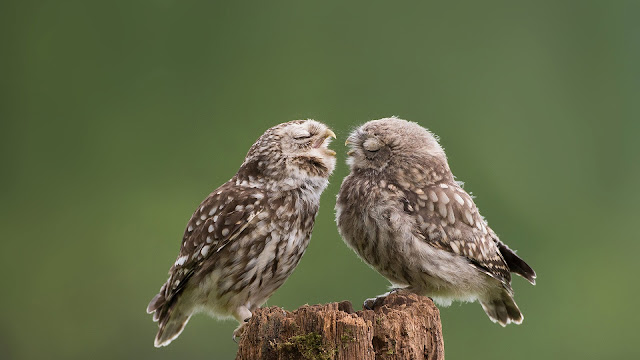
A little owl love on Mothering Sunday A love so pure and so selfless! This little owl is shown feeding her baby son as we celebrate Mothering Sunday in the UK. The UK’s smallest owl, they reach full height at around 20cm– so are quickly caught up by their offspring. With striking yellow eyes and a mottled brown and cream colouring, it is not unusual to spot little owls sitting on fence posts like this one during the daytime, scouring the ground for food – from crickets and beetles to small mammals. They nest in holes – usually in trees but, thanks to their small stature, can set up homes in abandoned rabbit burrows and cavities in buildings and rocks. The little owl was introduced to the UK in the late 1800's and is now largely found in the farming landscapes of southern and south east England. They raise their young between May and July and are quite chatty, so listen out for their distinctive calls - the males can be particularly noisy when establishing their territo...

Approaching Of Spring!

Image
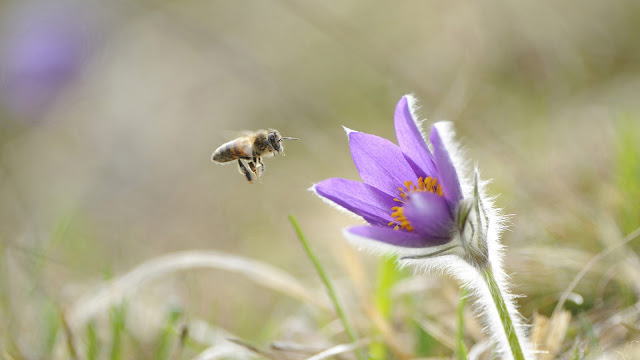
Honeybee approaching the flower of a common pasque flower (Pulsatilla vulgaris), Upper Palatinate, Bavaria, Germany Hooray, Lenz is here!.  Beginning of spring We welcome the beginning of spring with this wonderful picture of a honeybee approaching the bloom of an ordinary pasque flower.  The flower, which is widespread in Western and Central Europe, is one of the early bloomers and shows its flowers from March to May.  At the beginning of the flowering period, the plants are often in an attractive contrast to the garden, which still looks wintery. Unfortunately, the population of the common pasque flower is considered endangered.  In many German states it is threatened with extinction, in some regions such as Berlin, Hamburg and Bremen it is already extinct.  As colorful and tempting as the flower looks, people should keep their distance, because all parts of the plant in the common pasque flower are very poisonous.

The Beautiful Bee Eaters

Image
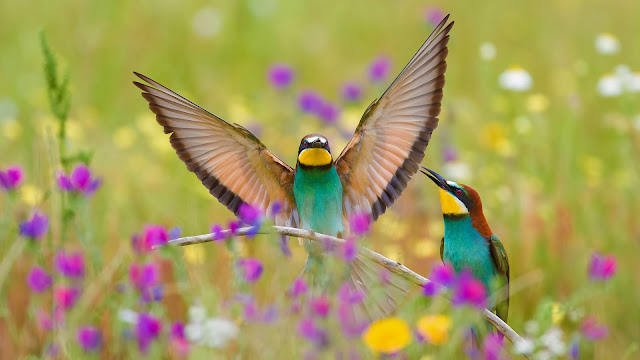
European bee-eaters in the Extremadura region in Spain Beautiful 'Bee' Predator! European bee-eaters really do eat bees, and other insects as well. They catch bugs mid-air, carry them to a perch, and pound them to rub out the venom, making them safe to eat. You can find these jewel-toned birds throughout Europe, especially in nature reserves and parks. These two are enjoying the abundant sunshine in the Extremadura region of Spain, one of the best areas for birdwatching on the continent.

A journey To The Warm Places

Image
An egret perches on a post at Lake Salton in California, USA Looking into the distance! Migratory birds are reliable frequent flyers who set off at the same time each year to fly approximately the same distance.  In search of food and water sources, the birds often fly long distances to reach breeding areas or wintering places.  Today is an important stopover for migratory birds: Lake Salton, the largest lake in California. This shallow salt lake was formed when a dam broke in 1905 and the Colorado River flowed into an approximately 56 km long basin with extensive salt deposits.  Today it attracts hundreds of bird species in what is considered one of the most important concentrations of bird life in mainland America. Most of these birds are only passing through and migrate along the north-south route known as the Pacific Flyway.  They gather there, sometimes in millions, to feed and gain strength before moving on.  Some birds, like the heron pictured...

Time For A Short Nap!

Image
A resting grizzly bear cub in Lake Clark National Park, Cook Bay, Alaska Here's Snoozy, The Bear!  Like the snoring little grizzly bear in this picture, we guess you may feel tired after losing an hour of sleep before daylight saving time begins.  So, we give you a good reason to snore-today is a national siesta day.  This sleep-inducing day was created in 1999 by Boston University professor William Anthony and always happens on Mondays after the "leap forward."  "The idea is that even if it's just an hour less sleep, most of us need to sleep more." If this sentence describes you, then maybe it's time to try taking a nap.

Water Thirsty Devil

Image
Thorny Devil (Moloch horridus) in Watarrka National Park, Northern Territory The devil is out there to haunt you! Don’t let their appearance fool you – Thorny Devils are actually less prickly than you might think. In fact, the endemic creature’s spiky exterior (each of which is said to be similar in size to a rose thorn) actually helps them absorb water in their arid habitat. This can be obtained via dew that condenses on their body overnight or by brushing up against dew-heavy grass. This water then finds its way into the various grooves around the Thorny Devil’s body, and makes its way to the mouth via capillary action. If you want to see one of these beautifully strange wonders in action, spring is the perfect time, as the next few months are their most active. But don’t dawdle, because come summer they will take refuge in underground burrows before briefly returning for mating season. They will be going to become almost completely inactive in the peak of summer. Can...

The Allure Of Some Predators

Image
Eurasian Eagle-Owl (Bubo bubo) in wildflower meadow, Rhineland-Palatinate, Germany Look at the ears and the fascinated feathers of this magnificent creature! Hedwig is probably one of the most famous owls in contemporary film history. As a faithful companion of Harry Potter, she has not only found a place in the hearts of many children, but also delighted many adults. We don't know why our leading actor looks so grim in this picture, but even a Lord Voldemort should be anxious and serious. Our owl – scientifically known as Bubo bubo - belongs to a genus of birds in the family of the actual owls. With a size of up to 75 centimetres, a weight of around 3.4 kilograms and a wingspan of about 1.80 metres, the owl is the largest owl in the world. Special features are its eye-catching feather ears and the striking orange eyes. Today's picture was taken in Rhineland-Palatinate. The main area of the owl is located in the state with the capital Mainz in the districts of Bad ...

The Messenger Of Happy Season

Image
Male mountain bluebird in Yellowstone National Park, Wyoming Hello, mountain bluebird Welcome back! Although this bright fellow may be enduring the last of this year's snow in Yellowstone National Park, his presence means winter will soon be ending across the world. Bluebirds are a symbol of happiness and a welcome sign of spring in many cultures. Soon other migratory birds will arrive in the Greater Yellowstone Ecosystem - a seven-million-hectare tract that includes Grand Teton National Park and surrounding national forests. It's the world's largest intact ecosystem in the northern temperate zone. What exactly does that mean? Since wolves were reintroduced to Yellowstone 25 years ago, all the animal species that were first documented by European explorers can still be found here. (© Jason Savage/Tandem Stills + Motio)

Lets Sustain Life On Earth

Image
Spectral tarsiers in a ficus tree in Tangkoko Batuangus Nature Reserve, Indonesia All eyes on sustainability We don't need an excuse to highlight and celebrate wildlife, but as it turns out, today is the UN's World Wildlife Day. This year's theme is 'Sustaining all life on Earth', focusing on biodiversity. The UN and its partners are producing a series of programs and social media activities, including an event at UN Headquarters in New York, a film festival, and an international youth art competition. Tangkoko Batuangus Nature Reserve in Indonesia is a great symbol of biodiversity, protecting hundreds of species of plants, mammals, birds, reptiles, and amphibians. Among the threatened mammals there are these spectral tarsiers. These small nocturnal primates have eyes that are larger than their brains, giving them an alien-like appearance. They're not in imminent danger of going extinct but are classified as vulnerable, and their population has de...

Some Cats without Hats

Image
A puma in the Andes, Argentina This lone puma walks in the Andes of Argentina, and it may be looking for a companion who can cluster.  Here is one of the biggest cats of the world! A 'Cougar' in fact and of course without a hat... (Wondering why???) Today is March 2 and here we are celebrating Dr. Seuss Birthday who wrote remarkable books and made our childhood memorable with pretty pictures and invincible rhymes. His famous book "The Cat In The Hat", is a story about a silly cat who always falls for wrong charms, still warming the hearts of the children.  Let's take a moment, stop making movement and recall old times, all fun and sun shines...  Do tell about about your favorite work of Dr. Seuss.  (© Sebastian Kennerknecht / Minden Pictures)

Little Hiding Wapusks (White Bears)

Image
Polar Bear Cubs Looking out of the Den, Wapusk National Park, Churchill, Manitoba, Canada "World Wildlife Day" tomorrow.  "Polar Bear Children Hiding in the Snow Cave", Manitoba, Canada Tomorrow, March 3, is "World Wildlife Day."  Enacted by the United Nations General Assembly to commemorate the Washington Treaty being adopted on March 3, 1973.  It is a day to raise awareness of various wildlife living in the natural environment ... This is  Wapusk   National Park in Manitoba, Canada.  "Wapusk" is an indigenous language that means "polar bears", and there are so many polar bears that it is called the "capital of polar bears."  They hunt on ice floes, but in recent years the effects of global warming have reduced ice floes and are threatening extinction. ( © Robert Harding / Alam)

A Leap On A Leap Day!

Image
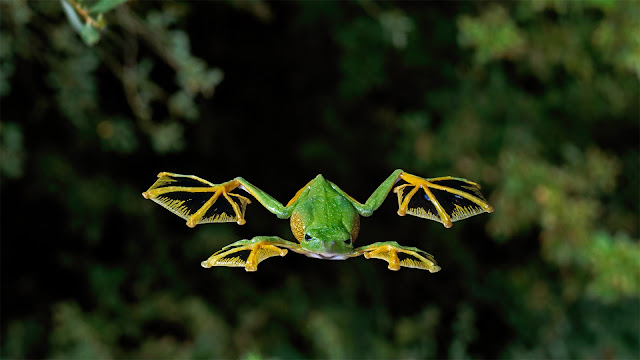
A Wallace's flying frog glides to the forest floor It's leap day! For leap day (the extra day added to February every four years), we're looking at a Wallace's flying frog. Also known as parachute frogs, these critters live in the tropical jungles of Malaysia and Borneo. They spend most of their time in trees, gliding down to the ground to mate and lay eggs. They 'fly' by leaping and using their webbed fingers and toes to glide as far as 15 metres. Leap years keep our calendar (the Gregorian calendar) aligned with the Earth's revolutions around the sun. People often refer to a calendar year as a 'trip around the sun', but that trip takes longer than the 365 days of a typical calendar year. It really takes 365 days, 5 hours, 48 minutes, and 45 seconds. Adding an extra day every four years solves the problem - almost. To keep our calendar mostly synchronised with the astronomical year, some further adjustments need to take place. Years tha...