Posts

Showing posts with the label bird

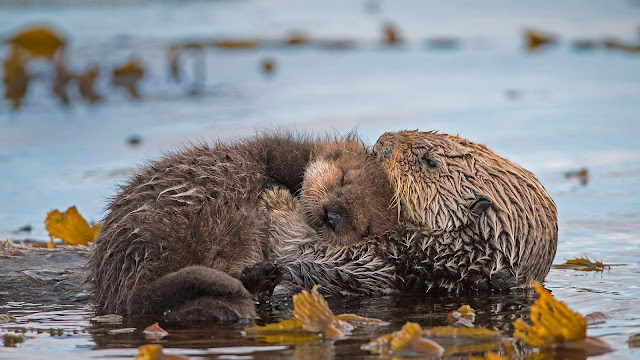
A Love So Deep... So Inspiring..
Image
  A new born pup is sleeping on the Mummy Sea Otter,  Monterey Bay  California. Sea otters shower their pups with attention, cradling them and grooming them for hours. But it's more than a gesture of affection - a mummy will rub her pup to fluff the pup's coat, which causes the fur to retain air bubbles. The air insulates the pup from chilly water and sometimes causes the youngster to float like a cork. Sea otters can survive on land, but they spend most of their time in the water, sleeping above the surface and anchoring themselves with kelp or by holding onto each other. When they get hungry, they use rocks as tools to hunt for food and pry open shells - something that makes them relatively unique, as they're one of the few mammals that can use tools.
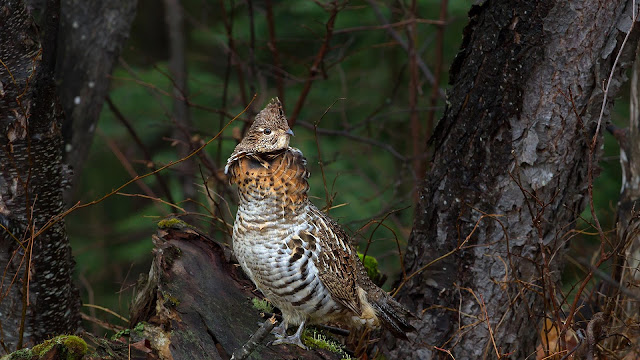
A Fool Bird On A Fool's Day

Image
A fool's hen? Ruffed grouse in Algonquin Provincial Park, Ontario, Canada by Jim Cumming. Various types of forest grouse are sometimes rather unkindly referred to as 'fool hens' because they don't fly away when approached by humans. In its northernmost habitat in Canada, the ruffed grouse pictured here is more likely to behave a little more ‘foolishly’, sitting and looking at people as they approach. But further south, they are more wary and fly off at the slightest sign of movement. And they can be quite the acrobatic fliers when needed, flying in short spurts and making sharp twists and turns as they navigate thick forests.

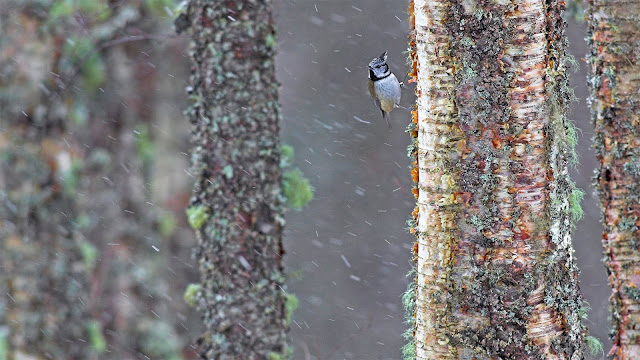
A Tiny Bird And Three Borrowed Days

Image
A stormy crested tit, Scotland Three more wintry days! Scottish people believe that the last three days of March is borrowed from April that's why are called 'Borrow Days'. March normally consists of lots of weather lore— one is springy and breezy, the other is wintry and snowy and the last one is rainy and sleety, according to Scottish folklore. These days are considered the wintry lapse and some think, they are ill-omen to reduce the businesses and makes birds frozen on their perch on the branches of trees. So today, in this image a b lack crowned  tit  ( Parus rubidiventris)  is perching on a tree in a stormy weather. Its  body is 12 cm long and is characterized by black crown feathers and chest pockets, white cheeks, gray upper body, no wings, gray lower body, and brown rump.  Young birds are dark and have a short plumage.   Generally they inhabit in alpine forest areas nearly 2000 meters above sea level, often active in alpine coniferous...

A Pair Of Crimson Rosella

Image
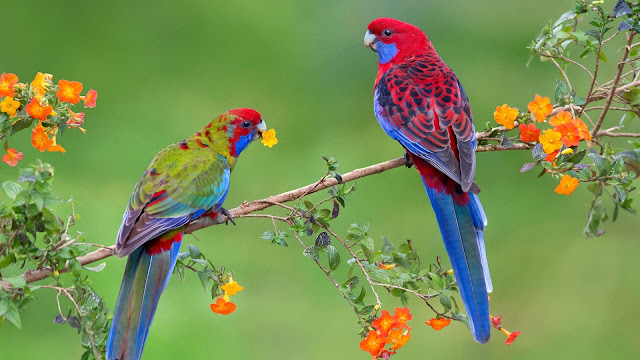
Crimson rosella with juvenile, Victoria, Australia Snack time for the crimson rosella Everybody loves a little snack, and the cheerful rosella is no exception. The bird, which is native to Australia (but has been introduced to New Zealand and Norfolk Island) will happily feast on tree blossoms, berries and insects, but more commonly nibbles on seeds of eucalyptus, grasses and shrubs. Make sure to pay close attention to its colour though, because there are actually three variations of rosellas. The crimson rosella, with a red plumage (the layer of feathers that mostly cover a bird) and bright blue cheeks. Then there is the ‘yellow rosella’, which has the areas of crimson replaced with a light yellow and greener tail, as well as the ‘Adelaide rosella’ which can range from yellow to a reddish-orange in colour. If you do happen to spot one out in the wild, don’t be scared - the birds are relatively familiar with humans and are known to accept hand-held food.

Mother– A Savior, A Protector

Image
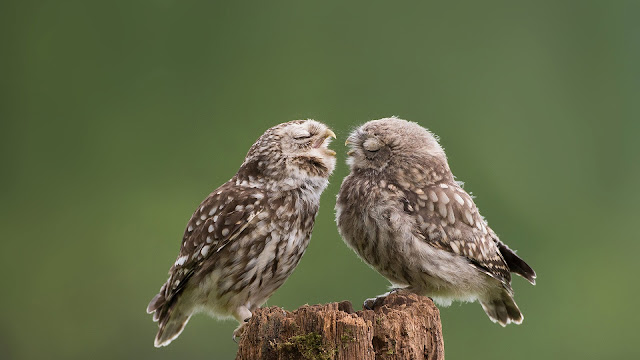
A little owl love on Mothering Sunday A love so pure and so selfless! This little owl is shown feeding her baby son as we celebrate Mothering Sunday in the UK. The UK’s smallest owl, they reach full height at around 20cm– so are quickly caught up by their offspring. With striking yellow eyes and a mottled brown and cream colouring, it is not unusual to spot little owls sitting on fence posts like this one during the daytime, scouring the ground for food – from crickets and beetles to small mammals. They nest in holes – usually in trees but, thanks to their small stature, can set up homes in abandoned rabbit burrows and cavities in buildings and rocks. The little owl was introduced to the UK in the late 1800's and is now largely found in the farming landscapes of southern and south east England. They raise their young between May and July and are quite chatty, so listen out for their distinctive calls - the males can be particularly noisy when establishing their territo...

The Beautiful Bee Eaters

Image
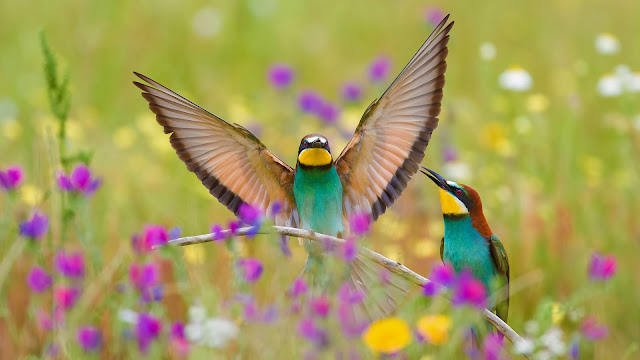
European bee-eaters in the Extremadura region in Spain Beautiful 'Bee' Predator! European bee-eaters really do eat bees, and other insects as well. They catch bugs mid-air, carry them to a perch, and pound them to rub out the venom, making them safe to eat. You can find these jewel-toned birds throughout Europe, especially in nature reserves and parks. These two are enjoying the abundant sunshine in the Extremadura region of Spain, one of the best areas for birdwatching on the continent.

A journey To The Warm Places

Image
An egret perches on a post at Lake Salton in California, USA Looking into the distance! Migratory birds are reliable frequent flyers who set off at the same time each year to fly approximately the same distance.  In search of food and water sources, the birds often fly long distances to reach breeding areas or wintering places.  Today is an important stopover for migratory birds: Lake Salton, the largest lake in California. This shallow salt lake was formed when a dam broke in 1905 and the Colorado River flowed into an approximately 56 km long basin with extensive salt deposits.  Today it attracts hundreds of bird species in what is considered one of the most important concentrations of bird life in mainland America. Most of these birds are only passing through and migrate along the north-south route known as the Pacific Flyway.  They gather there, sometimes in millions, to feed and gain strength before moving on.  Some birds, like the heron pictured...

The Allure Of Some Predators

Image
Eurasian Eagle-Owl (Bubo bubo) in wildflower meadow, Rhineland-Palatinate, Germany Look at the ears and the fascinated feathers of this magnificent creature! Hedwig is probably one of the most famous owls in contemporary film history. As a faithful companion of Harry Potter, she has not only found a place in the hearts of many children, but also delighted many adults. We don't know why our leading actor looks so grim in this picture, but even a Lord Voldemort should be anxious and serious. Our owl – scientifically known as Bubo bubo - belongs to a genus of birds in the family of the actual owls. With a size of up to 75 centimetres, a weight of around 3.4 kilograms and a wingspan of about 1.80 metres, the owl is the largest owl in the world. Special features are its eye-catching feather ears and the striking orange eyes. Today's picture was taken in Rhineland-Palatinate. The main area of the owl is located in the state with the capital Mainz in the districts of Bad ...

The Messenger Of Happy Season

Image
Male mountain bluebird in Yellowstone National Park, Wyoming Hello, mountain bluebird Welcome back! Although this bright fellow may be enduring the last of this year's snow in Yellowstone National Park, his presence means winter will soon be ending across the world. Bluebirds are a symbol of happiness and a welcome sign of spring in many cultures. Soon other migratory birds will arrive in the Greater Yellowstone Ecosystem - a seven-million-hectare tract that includes Grand Teton National Park and surrounding national forests. It's the world's largest intact ecosystem in the northern temperate zone. What exactly does that mean? Since wolves were reintroduced to Yellowstone 25 years ago, all the animal species that were first documented by European explorers can still be found here. (© Jason Savage/Tandem Stills + Motio)

The Three Musketeers (Polar Bears)

Image
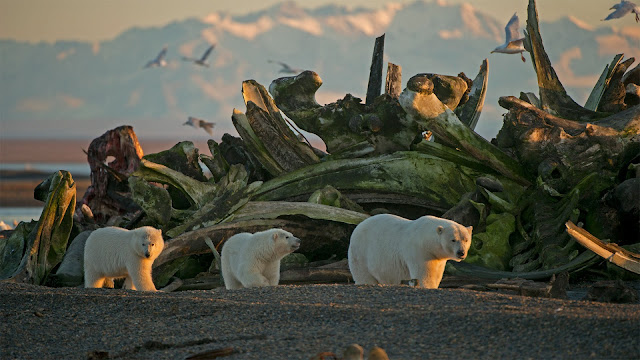
A polar bear sow and her cubs in Alaska's Arctic National Wildlife Refuge Three cheers for polar bears! February 27 is International Polar Bear Day, an observance created to bring attention to the important role these alpha predators play in the Arctic ecosystem. Though polar bears aren’t endangered - their current conservation status is ‘vulnerable’ - these magnificent beasts have become a sort of mascot for the race to slow the melting of Arctic sea ice. The Arctic ice is crucial to the bear's survival, as they hunt the ringed seals that bob up through holes in the ice. As Arctic ice decreases, the polar bear's hunting ground does too. ( © Steven Kazlowski/Minden Picture)

Cardinal And Winter Wonderland

Image
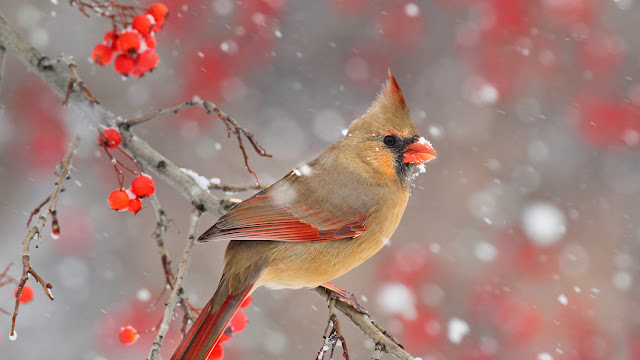
A female Cardinal  (© Matthew Studebaker / Minden Pictures)

Snowy Albatrosses

Image
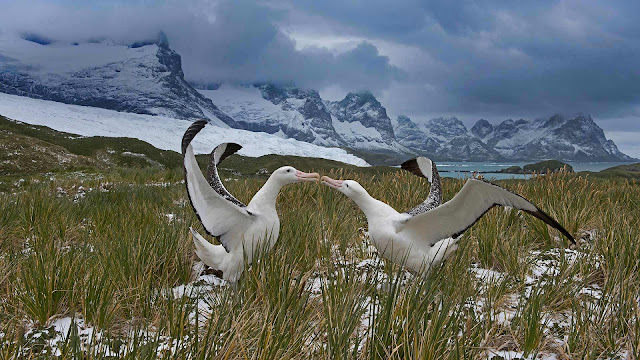
Wandering albatross pair, South Georgia island.

London Fashion Week And Little Old Ruff

Image
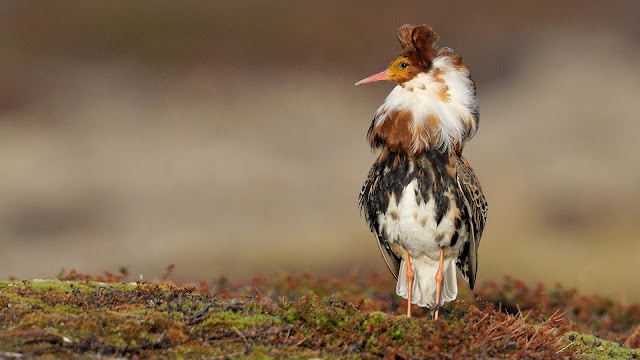
Ruff (Philomachus pugnax) male for London Fashion Week. This male ruff is catwalk-ready in his lavish plumage, designed to catch the eye of admiring females (who are much more modestly dressed). The males' flamboyant collars come in black, white, ginger, stripy and plain varieties which, along with their head tufts, help them compete for attention as they strut their stuff during breeding season. These wading birds breed in river meadows and coastal marshes from northern Europe to Siberia and can be spotted on the east and south coasts of the UK. They are usually passing through en route to African wetlands although some will over-winter here.

Reddish Egret

Image
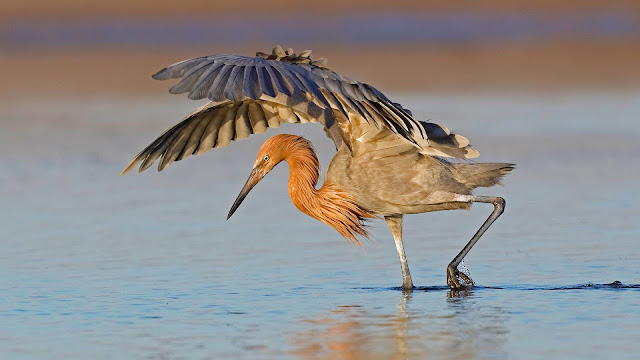
A brown necked heron hunting in Fort DeSoto Park, Florida

21st January— Squirrelly Day

Image
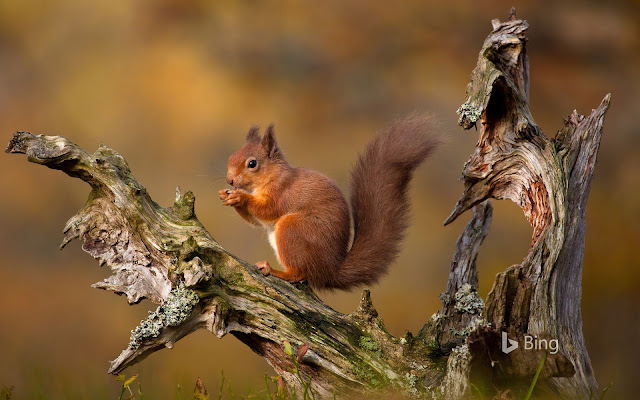
Eurasian red squirrel in the Cairngorms, Highlands of Scotland It's 'Squirrel Day' today.    It was established by Christy Hargrove, a wildlife rehabilitator from North Carolina on 21st January.   there are about 285 species of squirrels in the world, ranging from the tiny African pygmy squirrel to the Bhutan giant flying squirrel  .

Taikan Crane

Image
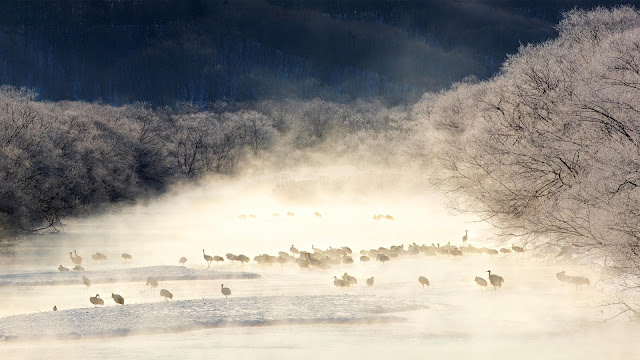
"The Japanese crane in the storm", Snow River, Hokkaido

Gold Finch In Snow

Image
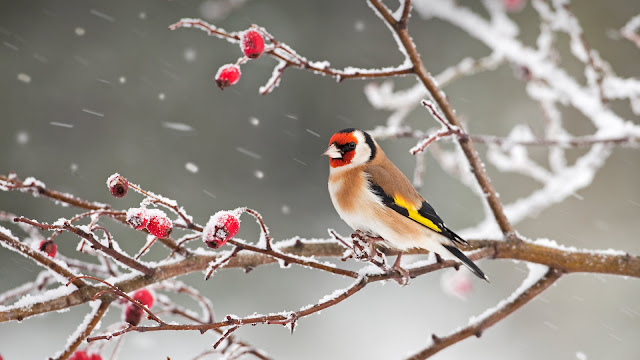
Red-billed silver finch is a wild bird distributed on plains and low forest areas from Eurasia to North Africa.

Digging The Birds

Image
Burrowing parrots in Las Lajas, Argentina.

"Crane" Hokkaido

Image
Japanese red-crowned crane in Hokkaido, Japan.

Trumpeter Winter

Image
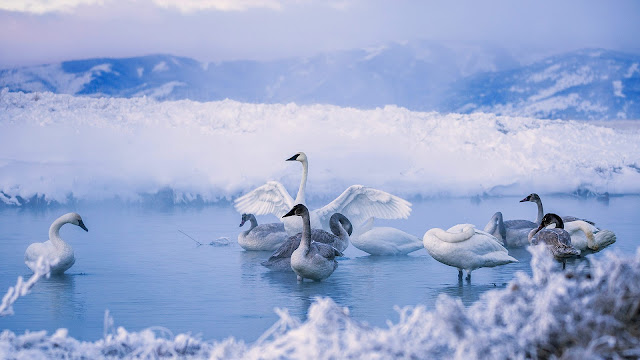
Trumpeter swans at Kelly Warm Springs, near Kelly, Wyoming.