Posts

Showing posts with the label swimming

A Love So Deep... So Inspiring..
Image
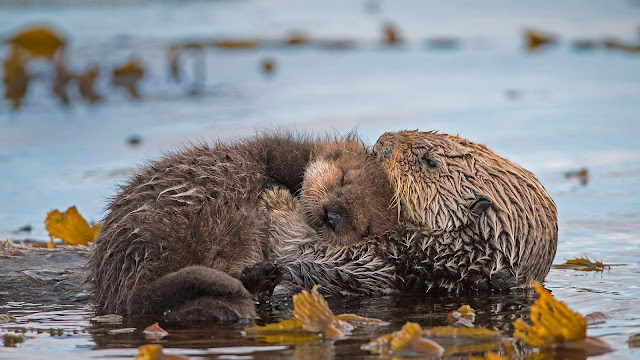
  A new born pup is sleeping on the Mummy Sea Otter,  Monterey Bay  California. Sea otters shower their pups with attention, cradling them and grooming them for hours. But it's more than a gesture of affection - a mummy will rub her pup to fluff the pup's coat, which causes the fur to retain air bubbles. The air insulates the pup from chilly water and sometimes causes the youngster to float like a cork. Sea otters can survive on land, but they spend most of their time in the water, sleeping above the surface and anchoring themselves with kelp or by holding onto each other. When they get hungry, they use rocks as tools to hunt for food and pry open shells - something that makes them relatively unique, as they're one of the few mammals that can use tools.
Narwhal— The Most Enchanted Beast Of The Sea

Image
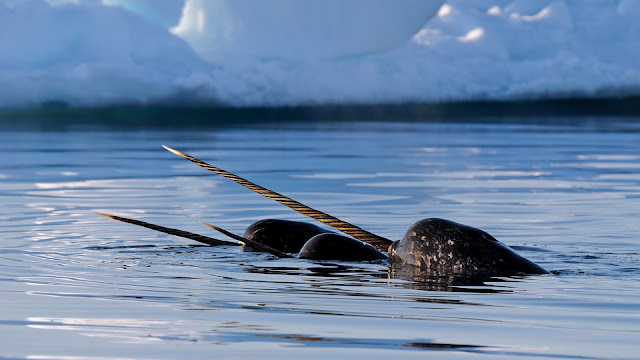
Let's celebrate  ‘the sparkliest day of the year' because it's The Unicorn Day by honoring  the beast of sea: A pod of narwhals or  narwhales. A pod of narwhals near Baffin Island, Nunavut, Canada by Eric Baccega. A pod of narwhals brandishing their tusks in the Arctic Ocean. Narwhals develop only two teeth, but - in males especially - the left canine can grow into a three-meter-long spiral tusk. As the tusk juts out of the top of their head, it's given the whale the nickname, 'unicorn of the sea'. For centuries narwhal tusks were sold to gullible buyers as rare unicorn horns with magical powers. These 'unicorn horns' were so prized for their medicinal and healing properties that in the 16th century, Queen Elizabeth I paid around A$20,000 for one (equal to the cost of building a castle back then). By the late 17th century, scientific facts started replacing superstitious beliefs and the unicorn horn market fell out of favor. Today narwhals c...

A Passageway For Migratory Whales

Image
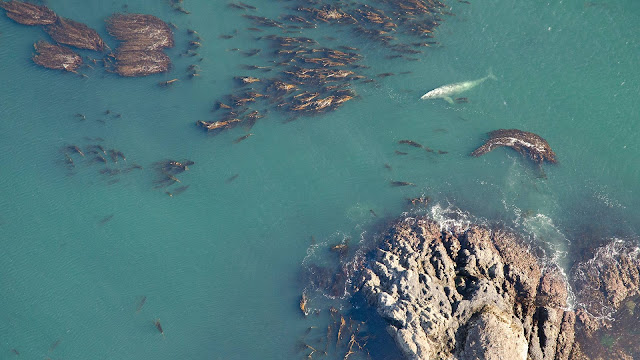
Aerial shot of grey whale (Eschrichtius robustus) at the surface among bull kelp in Vancouver Migration in progress In late winter and early spring, thousands of grey whales, many with calves in tow, swim by coastal waters of B.C. as they migrate from the warm waters of Baja California to their summer feeding grounds in the north. Come winter, they pass by again on the swim south. The entire roundtrip route clocks in at about 19,000 kilometres, making grey whales among the longest migrators of animal kingdom. Because they travel close to Vancouver’s coastline, it's also one of the few whale migrations that can be seen from shore.

The Summer And The Adventurous Ocean Baths

Image
Bird's-eye view of Bronte Baths ocean pool outside Sydney, Australia Summer in the southern hemisphere! While we're looking forward to spring in the northern hemisphere, many in Australia are probably preparing for the end of a bright summer.  The comparatively moderate autumn weather must be a relief for the people down under.  Some will likely greet the change of seasons with a trip to the pool, like the swimmers in this picture of the Bronte Baths, a suburban Sydney pool. While oceanfront swimming pools are not only found in Australia but—  this country is known for its many oceanfront pools that provide sheltered places to swim in places where rocky shorelines and occasional shark attacks can make swimming in the ocean difficult or dangerous.

Thousands Of Heavens Under Earth

Image
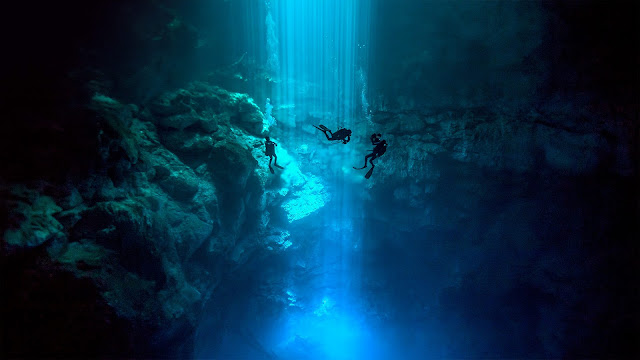
Divers at El Pit Cenote, located in Dos Ojos Natural Park, Quintana Roo, Mexico A different kind of dive The divers are descending the clear, turquoise waters of a cenote on Mexico’s Yucatan Peninsula. A cenote is a sinkhole that’s created when the limestone bedrock collapses and exposes groundwater underneath, creating pools of fresh water that delight swimmers, and even cave divers. They’re diving in ‘El Pit’ Cenote, part of a flooded cave system near Tulum. It’s one of thousands of cenotes, documented on the Yucatán, and a popular spot for divers who come to swim through the brilliant sunbeams. (© Christia Vizl/Tandem Stills + Motio)

Leafy Seadragon— The Unique Universe

Image
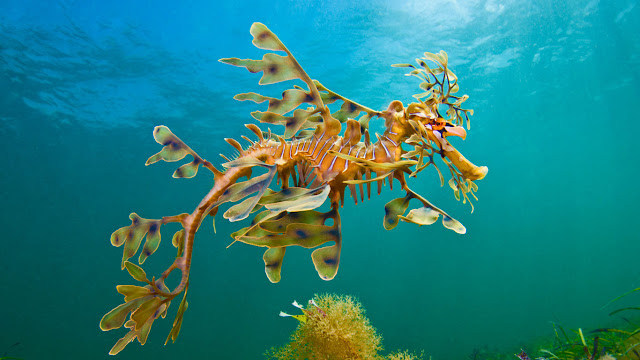
A leafy seadragon in the waters off Wool Bay, Australia Australia’s southern coast is leafy seadragon territory, so it’s the place to go if you want to see the camouflaged critter in its native habitat. This amazing specimen was photographed near Wool Bay. The leafy seadragon has evolved to resemble seaweed as a way to fool predators. It’s a relative of the seahorse, but isn’t quite the swimmer that its cousin is, so the camouflage gives it a big advantage. (© Alex Mustard/Minden Pictures)

Celebrating Women—Dr Sylvia Earle

Image
Dr. Sylvia Earle explores the Great Barrier Reef in a scene from 'Mission Blue'.

Tooth Walking Seahorse

Image
Walruses near Kvitøya in the Svalbard archipelago, Norway

Abraham Lake―The Frozen Beauty

Image
Bubbles in the ice of Abraham Lake in Alberta, Canada

Cormorant Mackerel

Image
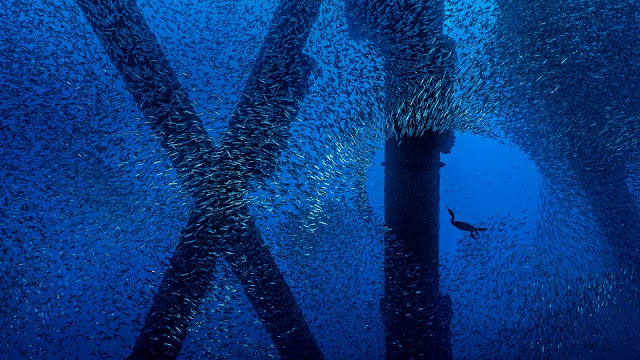
A Brandt's cormorant hunts for a meal in a school of Pacific mackerel beneath an oil rig off the coast of Los Angeles, California.

Celebrating Whales - And A Whale Of A Tale

Image
Sperm whale mother and albino baby swimming off the coast of Portugal.