Posts

Showing posts with the label insect

Approaching Of Spring!
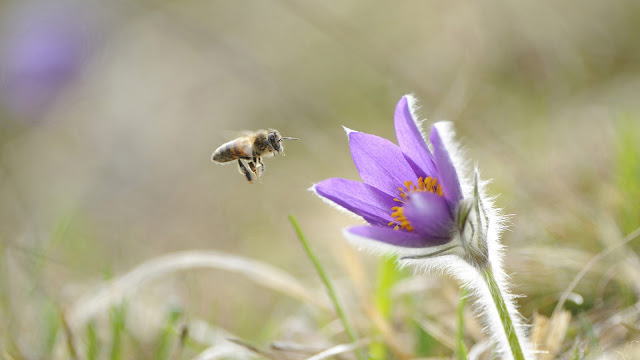
Image
Honeybee approaching the flower of a common pasque flower (Pulsatilla vulgaris), Upper Palatinate, Bavaria, Germany Hooray, Lenz is here!.  Beginning of spring We welcome the beginning of spring with this wonderful picture of a honeybee approaching the bloom of an ordinary pasque flower.  The flower, which is widespread in Western and Central Europe, is one of the early bloomers and shows its flowers from March to May.  At the beginning of the flowering period, the plants are often in an attractive contrast to the garden, which still looks wintery. Unfortunately, the population of the common pasque flower is considered endangered.  In many German states it is threatened with extinction, in some regions such as Berlin, Hamburg and Bremen it is already extinct.  As colorful and tempting as the flower looks, people should keep their distance, because all parts of the plant in the common pasque flower are very poisonous.

Water Thirsty Devil

Image
Thorny Devil (Moloch horridus) in Watarrka National Park, Northern Territory The devil is out there to haunt you! Don’t let their appearance fool you – Thorny Devils are actually less prickly than you might think. In fact, the endemic creature’s spiky exterior (each of which is said to be similar in size to a rose thorn) actually helps them absorb water in their arid habitat. This can be obtained via dew that condenses on their body overnight or by brushing up against dew-heavy grass. This water then finds its way into the various grooves around the Thorny Devil’s body, and makes its way to the mouth via capillary action. If you want to see one of these beautifully strange wonders in action, spring is the perfect time, as the next few months are their most active. But don’t dawdle, because come summer they will take refuge in underground burrows before briefly returning for mating season. They will be going to become almost completely inactive in the peak of summer. Can...

A Leap On A Leap Day!

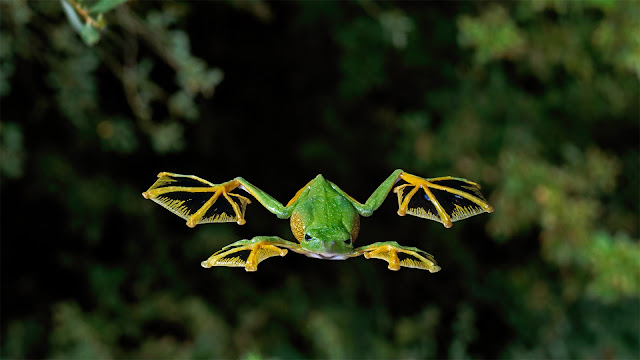
Image
A Wallace's flying frog glides to the forest floor It's leap day! For leap day (the extra day added to February every four years), we're looking at a Wallace's flying frog. Also known as parachute frogs, these critters live in the tropical jungles of Malaysia and Borneo. They spend most of their time in trees, gliding down to the ground to mate and lay eggs. They 'fly' by leaping and using their webbed fingers and toes to glide as far as 15 metres. Leap years keep our calendar (the Gregorian calendar) aligned with the Earth's revolutions around the sun. People often refer to a calendar year as a 'trip around the sun', but that trip takes longer than the 365 days of a typical calendar year. It really takes 365 days, 5 hours, 48 minutes, and 45 seconds. Adding an extra day every four years solves the problem - almost. To keep our calendar mostly synchronised with the astronomical year, some further adjustments need to take place. Years tha...

A Beautiful Pair Of Butterflies

Image
A pair of Galle White-Eyed Butterfly landing on a flower, Alsace, France.