Posts

Showing posts with the label colorful

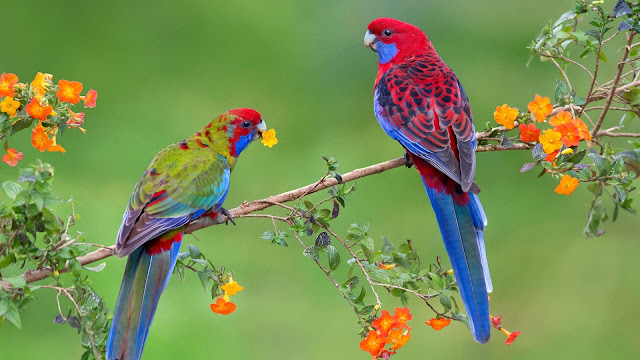
A Pair Of Crimson Rosella
Image
Crimson rosella with juvenile, Victoria, Australia Snack time for the crimson rosella Everybody loves a little snack, and the cheerful rosella is no exception. The bird, which is native to Australia (but has been introduced to New Zealand and Norfolk Island) will happily feast on tree blossoms, berries and insects, but more commonly nibbles on seeds of eucalyptus, grasses and shrubs. Make sure to pay close attention to its colour though, because there are actually three variations of rosellas. The crimson rosella, with a red plumage (the layer of feathers that mostly cover a bird) and bright blue cheeks. Then there is the ‘yellow rosella’, which has the areas of crimson replaced with a light yellow and greener tail, as well as the ‘Adelaide rosella’ which can range from yellow to a reddish-orange in colour. If you do happen to spot one out in the wild, don’t be scared - the birds are relatively familiar with humans and are known to accept hand-held food.
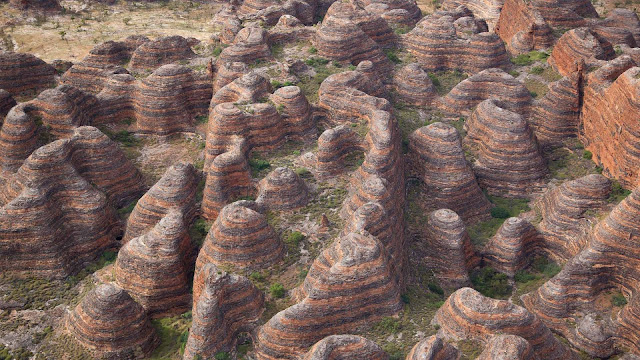
Bungle Bungles Or Beehives!

Image
Beehive domes in the Bungle Bungle Range in the Purnululu World Heritage Listed National Park More than meets the eye Welcome to Purnululu National Park, a World Heritage Listed site that managed to be one of the world’s best kept secrets until relatively recently. Although it has existed for around 350 million years and respected by its Indigenous Australian custodians for upwards of 40,000 years, it wasn’t until 1983 that the area became public knowledge after airborne treasure-seekers stumbled upon the area while making a documentary. Nowadays, the park’s most popular area is the Bungle Bungle Range, also commonly referred to as the Bungle Bungles. With soaring rocks rising 250 metres above the grasslands, many people liken the maze of domes to giant beehives, however you needn’t worry about pesky stingers - it’s in look only. The formations were instead created over the span of 20 million years as water gradually eroded the orange and black-striped karst sandstone into t...

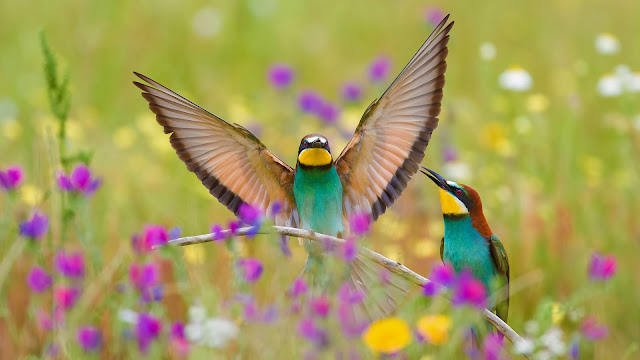
The Beautiful Bee Eaters

Image
European bee-eaters in the Extremadura region in Spain Beautiful 'Bee' Predator! European bee-eaters really do eat bees, and other insects as well. They catch bugs mid-air, carry them to a perch, and pound them to rub out the venom, making them safe to eat. You can find these jewel-toned birds throughout Europe, especially in nature reserves and parks. These two are enjoying the abundant sunshine in the Extremadura region of Spain, one of the best areas for birdwatching on the continent.

The Allure Of Some Predators

Image
Eurasian Eagle-Owl (Bubo bubo) in wildflower meadow, Rhineland-Palatinate, Germany Look at the ears and the fascinated feathers of this magnificent creature! Hedwig is probably one of the most famous owls in contemporary film history. As a faithful companion of Harry Potter, she has not only found a place in the hearts of many children, but also delighted many adults. We don't know why our leading actor looks so grim in this picture, but even a Lord Voldemort should be anxious and serious. Our owl – scientifically known as Bubo bubo - belongs to a genus of birds in the family of the actual owls. With a size of up to 75 centimetres, a weight of around 3.4 kilograms and a wingspan of about 1.80 metres, the owl is the largest owl in the world. Special features are its eye-catching feather ears and the striking orange eyes. Today's picture was taken in Rhineland-Palatinate. The main area of the owl is located in the state with the capital Mainz in the districts of Bad ...

The Messenger Of Happy Season

Image
Male mountain bluebird in Yellowstone National Park, Wyoming Hello, mountain bluebird Welcome back! Although this bright fellow may be enduring the last of this year's snow in Yellowstone National Park, his presence means winter will soon be ending across the world. Bluebirds are a symbol of happiness and a welcome sign of spring in many cultures. Soon other migratory birds will arrive in the Greater Yellowstone Ecosystem - a seven-million-hectare tract that includes Grand Teton National Park and surrounding national forests. It's the world's largest intact ecosystem in the northern temperate zone. What exactly does that mean? Since wolves were reintroduced to Yellowstone 25 years ago, all the animal species that were first documented by European explorers can still be found here. (© Jason Savage/Tandem Stills + Motio)

Carnival Of Olinda

Image
"Carnival giant puppet", Olinda, Brazil. 

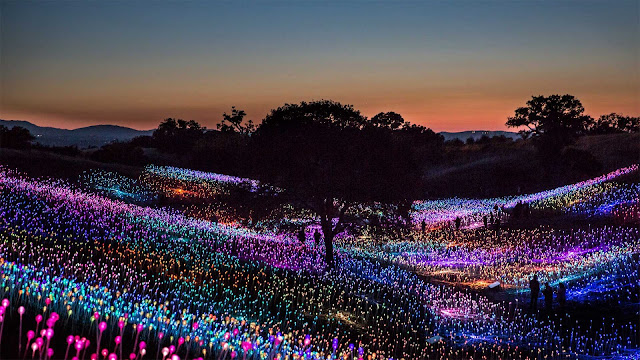
Field of Light at Sensorio

Image
Field of Light at Sensorio, by Bruce Munro, Paso Robles, California. When the sun sets, the fibers illuminate, creating a shimmering, interactive landscape in the meadow. Fifty eight thousand and eight hundred solar powered lights change colors and make people happy.