Posts

Showing posts with the label stone

A Sight Descended From The Past - A Castle On The Hill
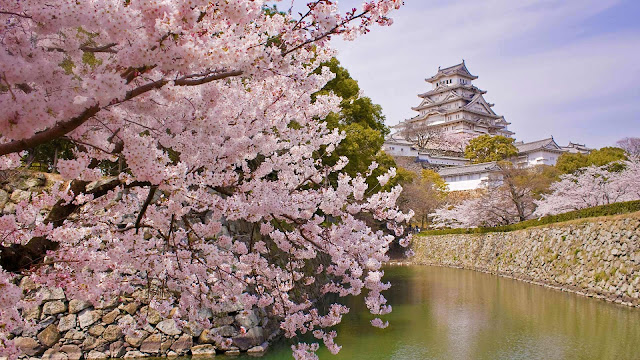
Image
Castle on the hill! Cherry blossoms and Himeji Castle in Himeji, Japan by Tororo. In honour of Castle Day in Japan, we're featuring Himeji Castle - one of the most pristine examples of traditional Japanese castle architecture and a UNESCO World Heritage Site.  Castle Day is on April 6 (or 4/6) because the Japanese character for castle (城) is read as 'shiro', and the Japanese pronunciation of 'four' is 'shi' and 'six' is 'ro'. Samurai warrior Akamatsu Norimura built Himeji Castle in 1333 as a fortress. Over the years, the structure has been remodelled many times and buildings were added as it changed hands. The castle even survived World War One unscathed while surrounding areas were bombed mercilessly. Today, it’s perhaps the best-known castle in Japan.
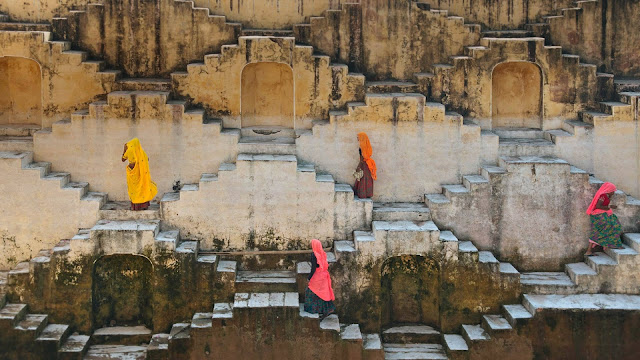
Stepping In The Past

Image
Women climbing a stepwell near Amber Fort in Jaipur, Rajasthan, India Stepping down the ancient stairwells of Jaipur Stairwells  originated in western India over 1,000 years ago as way for people living in that arid climate to get easy and reliable access to fresh water, even during the driest months. The Panna Meena Ka Kund stepwell in Jaipur is a classic example of the beautiful geometric architecture used to produce them. Most stepwells also feature shaded side chambers where locals (primarily women) can gather to escape the heat of the day. In this image, one can see obvious signs of previous high-water marks on the well’s walls as seasonal fluctuations and the changing climate affect water levels throughout the region.

Fairy Chimneys And Cave Dwellings

Image
Fairy chimneys and cave dwellings in Uçhisar, Cappadocia, Turkey And to think that I saw it in Cappadocia The fantastical 'fairy chimneys' found in central Turkey's historic Cappadocia region were formed by a collision of the natural and the man-made - and they form a scene that seems straight out of a Dr. Seuss illustration. The landforms were created when volcanoes deposited mounds of soft, porous rock called tuff, which was later covered with hard basalt. In the 10th century (though possibly starting up to 5,000 years ago) humans excavated the tuff to create caves and catacombs that could fit thousands of dwellers. Through not only the astonishing ruins but the many 'cave hotels' hewn into rock in the city of Göreme, the memory of those ingenious city planners lives on. (© Ivan Kmit/Alam)

The Remains Of Mughal Glory

Image
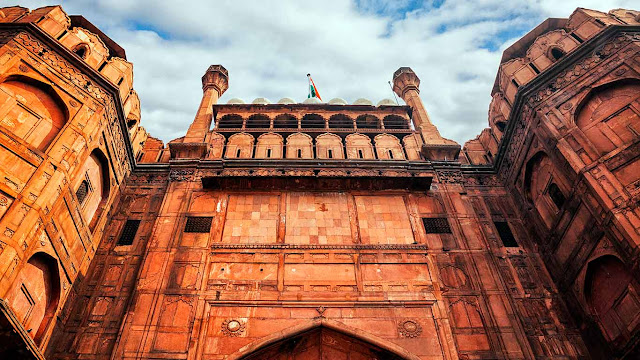
Lahori Gate of the Red Fort, Delhi.  Entrance to the Red Fort, Delhi It was on this day in 1931, that the city of Delhi was officially inaugurated as the capital of British territories in India, while the name ‘New Delhi’ was first used in 1927. Two decades earlier, in 1911, the British had made the decision to transfer the capital from Kolkata (then called Calcutta) to Delhi. New Delhi remained the capital of India after independence, and the partition of the country in 1947. The Lahori Gate of the Red Fort, featured on today’s homepage, is a significant landmark of the city of Delhi. While the fort served as the residence of the Mughal emperors for over 200 years, it is today used as the venue from where the prime minister addresses the nation on occasions like Independence Day. ( © powerofforever/iStock/Getty Images Plu)

Trimurthi Sadashiva (Three Faced Shiva)

Image
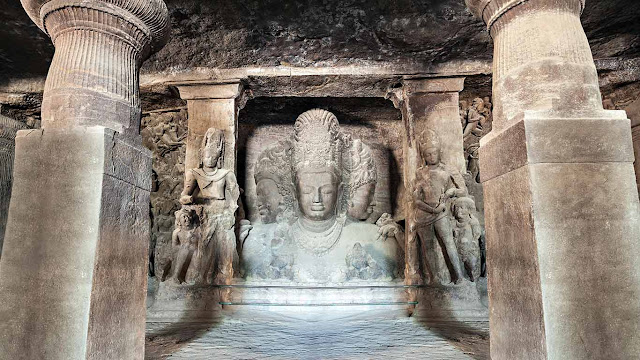
Elephanta Island caves near Mumbai, Maharashtra. Take a step into Elephanta Caves It's the day leading up to Maha Shivratri, we take you to the UNESCO world heritage site of the Elephanta Caves. A short ferry ride away from Mumbai’s Gateway of India takes you to Elephanta Island, where the caves, dating back to the 2nd century BCE depict various forms of Shiva and Parvati, as well as some Buddhist stupas. Most of what you see at the caves is carved out of solid basalt rock. The 20-foot Trimurthi Sadashiva (Three faced Shiva) is the most prominent carving, while Natraj (God of dance) and Yogishwara (God of Yoga) are also celebrated attractions on Elephanta Island. (© Andrey Khrobostov/Alamy Stock Phot)

Dark Sky Festival

Image
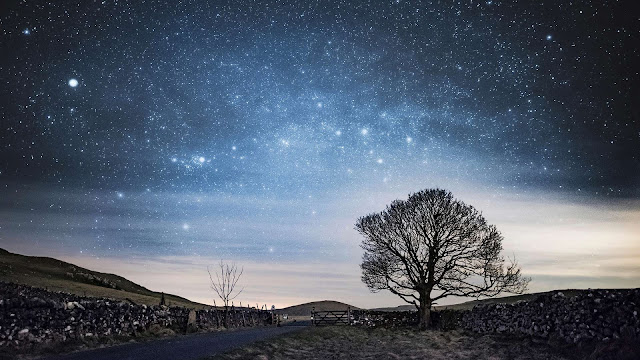
Malham's night sky, North Yorkshire, UK. Stars in the night sky Light pollution can cause trouble for astronomy enthusiasts who want to see the galaxy.  But for those who are preparing to go out in warm clothes on these dark winter nights, some of our national parks offer great views.  Our homepage picture was taken in the village of Malham in Yorkshire Dales National Park, which, along with North York Moore National Park, offers the best night sky in the UK. Now the fifth annual Dark Sky Festival, low-light pollution and clear vision provide future astronomers with the opportunity to see up to 2,000 stars at once without street lights.  In some places you can see our galaxy, the Milky Way, with the naked eye and through the park, you will get great views of the night sky.  There are also ghost walks, night pulls, moonlight canoeing, and mountain biking, which are suitable for those brave quasi-astronists, while others may want to relax and enjoy the sta...

Happy President Day

Image
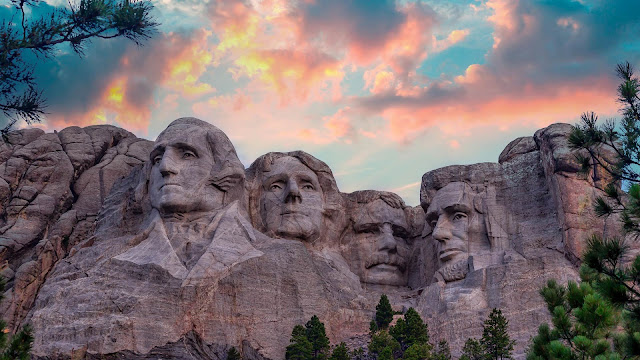
Mount Rushmore National Memorial in South Dakota. Happy Presidents Day It's hard to imagine a more appropriate place to celebrate Presidents Day than here, at the Mount Rushmore National Memorial. The monument features four of the most famous American presidents—George Washington, Thomas Jefferson, Theodore Roosevelt, and Abraham Lincoln. Four hundred workers using dynamite, hammers, and chisels crafted these 60-foot-high sculptures out of the granite mountainside in the Black Hills of South Dakota. Work on the monument began in 1927 and was completed in 1941.

Rapa Nui Festival

Image
Moai statues at Ahu Tongariki in Rapa Nui National Park, Easter Island, Chile